

Restaurant Search Visibility Report
How restaurant brands are discovered across Google Search, Google Maps and AI-powered search—and why traditional SEO alone is no longer enough.
Last updated:
| Reading time: 7 mins
Prepared by The Digital Restaurant Research & Insights
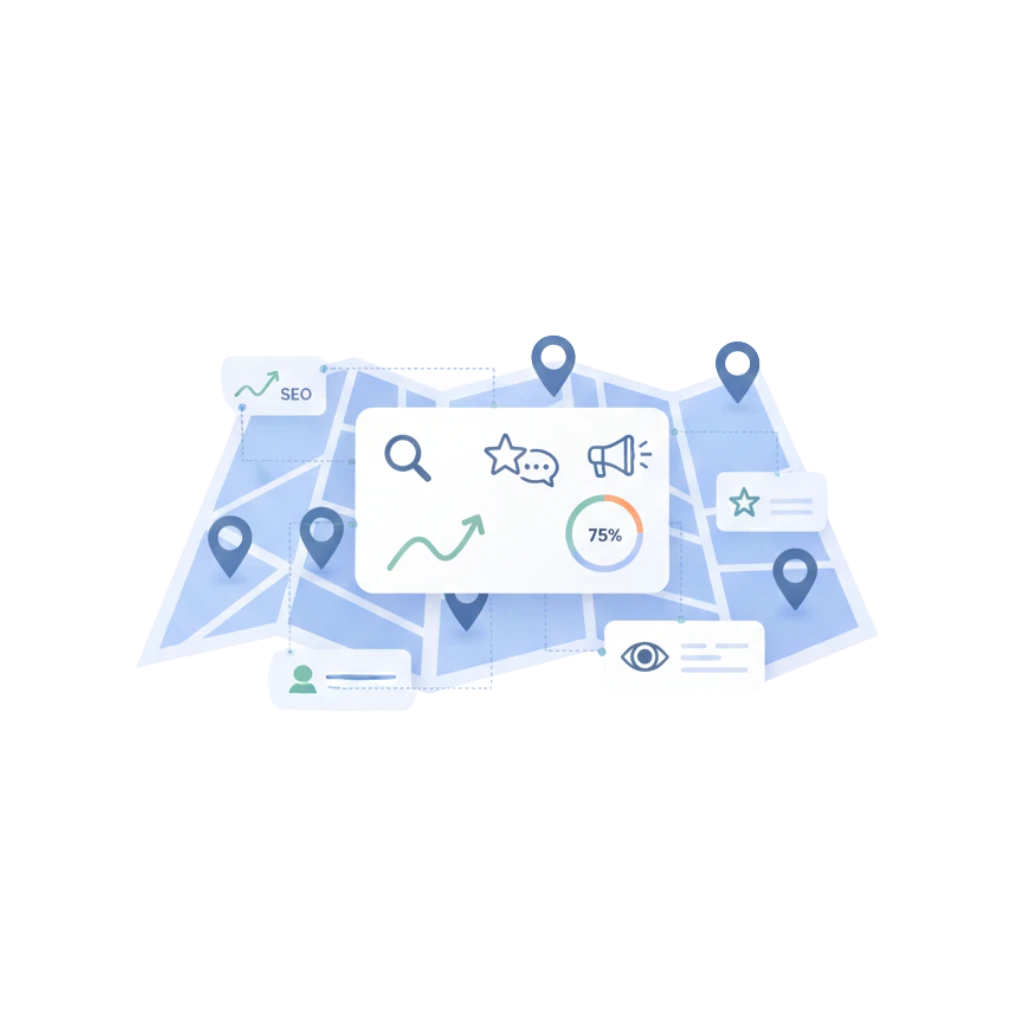
Restaurant search visibility is no longer limited to ranking a website in Google. Customers now discover, compare and choose restaurants across Google Search, Google Maps, review platforms and AI-powered services such as ChatGPT, Gemini and Claude.
Google remains the foundation of restaurant discovery, but the discovery journey has expanded. A restaurant can rank for its own name and still be absent when a customer asks an AI assistant for a recommendation, compares restaurants in a neighborhood or searches for a specific dining occasion. The strategic question is no longer simply, “Do we rank?” It is, “Can customers find, understand and choose us wherever they search?”
This report brings together observations from The Digital Restaurant’s work with restaurant brands, anonymized Google Search Console and Google Analytics data, NGAZE visibility data, selected public searches and documented client case studies. It is an evidence-led report—not an industry-wide benchmark—and will be updated as additional data becomes available.
Executive summary
- Google is still essential.
A technically sound, authoritative restaurant website and accurate Google Business Profiles remain the foundation for organic, local and AI-powered discovery. - Search behavior is expanding.
Customers increasingly use conversational tools to ask for recommendations based on cuisine, location, occasion, dietary needs, atmosphere and value—not just a restaurant’s name. - Rankings alone do not explain business performance.
Visibility must be evaluated alongside click-through, engagement, conversion paths and revenue-producing actions. - AI search introduces a new visibility gap.
A restaurant may be accurately represented, inaccurately described or completely absent depending on the sources an AI system discovers and trusts. - Basic automated SEO is insufficient.
Generating titles, descriptions and generic content with AI does not create the entity clarity, location accuracy, reputation, authority and conversion infrastructure required for durable visibility.
The restaurant search landscape has changed
Traditional restaurant SEO focused primarily on keywords, webpages and Google rankings. That work still matters, but customers now move between several connected discovery surfaces. They may begin with a Google search, examine the local map results, read reviews, visit the restaurant website, compare menus and then ask an AI assistant for a recommendation before deciding where to order or dine.
AI search also changes the format of discovery. Instead of entering a short keyword such as “pizza near me,” a customer can ask, “What is the best family-friendly pizza restaurant near me with easy parking and gluten-free options?” The answer may be assembled from the restaurant’s website, Google Business Profile, reviews, directories, articles and other third-party sources. If those sources are incomplete, inconsistent or weak, the restaurant may not be recommended—even when it performs reasonably well in traditional search.
What our initial restaurant data shows
Traditional search performance is not moving uniformly. An initial review of three anonymized restaurant websites, refreshed October 31, 2026, found different relationships between organic sessions, Google clicks and average position when compared with the preceding reporting period.
| Example site | Organic sessions | Google clicks | Average position |
|---|---|---|---|
| Restaurant A | Down 3% | Up 5% | 11.7, previously 11.2 |
| Restaurant B | Down 8% | Down 11% | 7.4, improved from 7.9 |
| Restaurant C | Down 27% | Down 12% | 6.2, unchanged |
The important observation is not that Google has stopped working. It has not. The data shows that ranking position, clicks and website sessions can move differently. A restaurant can hold or improve its average position while traffic declines because demand, search-result presentation, click behavior and discovery surfaces are changing. Measuring rankings alone can therefore create a false sense of security.
TDR’s sales conversations show a parallel change among restaurant decision-makers: prospects increasingly report using ChatGPT, Claude and other AI services to discover and evaluate marketing providers. Restaurant customers are adopting the same behavior for local discovery, comparison and recommendations. The practical implication is that AI visibility must now be measured alongside—not instead of—Google visibility.
Google remains the foundation for AI visibility
Investing in AI search does not mean abandoning Google SEO. AI systems need reliable information, and many of the signals that strengthen traditional search also make a restaurant easier for AI systems to understand and recommend.
- A fast, accessible and crawlable official website
- Clear pages for every restaurant location
- Accurate menus, hours, services and business information
- Complete Google Business Profiles connected to the correct owned pages
- Consistent restaurant identity across trusted platforms
- Healthy reviews and evidence of real customer experiences
- Structured data that clarifies the business, locations, menus and services
- Independent mentions, citations, case studies and authoritative coverage
Google visibility and AI visibility should therefore be treated as connected layers of the same system. Weak website and local-search foundations cannot be repaired by adding a few AI-generated FAQs or an llms.txt file.
Why automated “SEO optimization” is not enough
Many restaurant platforms now advertise automated SEO or AI-powered optimization. These features commonly generate titles, meta descriptions, short content blocks or basic schema. Those elements can be useful, but they are implementation details—not a complete visibility strategy.
A durable restaurant search strategy requires decisions that generic automation cannot make reliably: which customer demand to pursue, how locations should be differentiated, which conversion path should be promoted, where third parties are intercepting traffic, what reputation gaps are limiting recommendations, which claims need evidence and how visibility connects to orders, reservations, catering and private-event inquiries.
The complete restaurant search visibility framework
1. Customer intent research
Traditional keyword research is no longer sufficient because customers now discover restaurants across Google Search, Maps, review platforms and AI assistants using everything from short keywords to detailed conversational questions. The strategy must identify the underlying customer intent. Keywords remain useful, but customer intent provides the foundation for visibility across every search platform.
2. Organic search visibility
The official restaurant website should rank for meaningful branded and non-branded searches, answer the questions customers actually ask and lead visitors to the correct location, menu and action. Performance should be evaluated through impressions, clicks, click-through rate, position, landing-page engagement and conversions.
3. Local and Google Maps visibility
Each location needs accurate business information, relevant categories, strong reviews, current photos and links to owned website and ordering experiences. Multi-location brands also need centralized governance so that location-level changes do not fragment the brand.
4. AI-search visibility
Restaurants should test whether ChatGPT, Gemini, Claude and other AI platforms mention and recommend the brand for realistic customer questions. The evaluation must go beyond a simple mention: Is the information accurate? Which location is recommended? What sources are cited? Does the answer present a compelling reason to choose the restaurant?
5. Authority and reputation
Search engines and AI systems look beyond a restaurant’s own claims. Reviews, local citations, editorial mentions, community recognition and consistent third-party information help establish whether the restaurant is known and trusted.
6. Conversion and revenue
Visibility has little value if the customer reaches a slow website, cannot find the right location or is pushed into a third-party marketplace unnecessarily. Search strategy must connect discovery to measurable actions such as direct orders, reservations, calls, catering leads and private-event inquiries.
Questions every restaurant should be able to answer
- For which non-branded searches does each location appear?
- Does the restaurant appear in Google Maps for the categories and occasions that matter?
- Do ChatGPT, Gemini and Claude recommend the restaurant for realistic customer prompts?
- Is the information presented by AI accurate, current and consistent?
- Which websites and sources are influencing those answers?
- Are third-party platforms outranking or intercepting traffic intended for the restaurant?
- Which landing pages turn search visibility into orders, reservations and inquiries?
- Can management see performance across brand and location levels in one view?
A practical starting plan
- Establish the baseline.
Record current Google Search, Maps and AI-search visibility for the brand and each location. - Correct the foundation.
Resolve inaccurate location data, weak website performance, missing location pages and disconnected conversion paths. - Clarify the restaurant entity.
Make the cuisine, locations, services, menu, reputation and differentiators easy to understand across owned and trusted third-party sources. - Build authority.
Strengthen reviews, citations, relevant content, local recognition and independent mentions. - Measure business outcomes.
Connect visibility to website engagement, direct orders, reservations, catering, calls and qualified inquiries. - Review continuously. Search results and AI recommendations change. Monitor the same priority queries and prompts over time and act on evidence.
What restaurant operators should conclude
The correct response to AI search is neither panic nor a quick technical add-on. Restaurant brands need to expand their definition of search visibility while protecting the Google, website and local-search foundations that feed the broader discovery ecosystem.
The winning strategy is comprehensive: become discoverable in Google, visible in Maps, understandable to AI systems, trusted across independent sources and prepared to convert that attention into owned customer relationships and revenue.
Your questions, answered.
What is restaurant search visibility?
Restaurant search visibility is how easily customers can discover a restaurant across Google Search, Google Maps, local listings and AI-powered tools such as ChatGPT and Gemini. Strong visibility requires accurate business information, relevant website content, healthy reviews, local authority and a website that clearly communicates what the restaurant offers.
How is AI search changing restaurant discovery?
Customers increasingly use AI tools to discover, compare and evaluate restaurants through conversational questions. Instead of searching only by restaurant name or cuisine, they may ask for recommendations based on location, occasion, dietary needs, atmosphere or services. AI platforms form their answers using information found across restaurant websites, business listings, reviews and other trusted online sources.
Does traditional restaurant SEO still matter?
Yes. A technically sound website, relevant content, local search optimization, accurate business information and third-party authority remain foundational. These signals help Google understand and rank a restaurant and can also influence how AI platforms identify, interpret and recommend the business. AI visibility expands the search landscape; it does not replace traditional SEO.
How can a restaurant improve its visibility in ChatGPT, Gemini and Google AI results?
Restaurants should clearly describe their cuisine, locations, services and distinguishing qualities on their websites; maintain accurate Google Business Profiles and listings; earn consistent customer reviews and reputable third-party mentions; publish useful, evidence-based content; and ensure that search engines and AI crawlers can access the site. Improvement requires a coordinated SEO, local-search, reputation and authority strategy—not simply adding AI-generated content or FAQs.
How can restaurants measure Google and AI-search visibility?
Google Search Console can measure impressions, clicks, queries and search positions from Google. Google Business Profile and website analytics provide additional information about local discovery, traffic and customer actions. AI visibility can be evaluated by monitoring representative customer questions across platforms such as ChatGPT, Gemini and Claude, recording whether the restaurant is mentioned, how it is described and which sources are cited. These findings should ultimately be connected to website engagement, direct orders, reservations and qualified inquiries.
About this report
This report is based on The Digital Restaurant’s experience working exclusively with restaurants, anonymized data from real restaurant sites, NGAZE visibility and analytics reporting, selected public search tests and documented restaurant marketing case studies. It is intended to identify practical patterns and decisions.
See how your restaurant appears across Google and AI search—get your marketing roadmap →