
If you’ve done SEO for a restaurant any time in the last decade, you’ve built strategy around restaurant SEO keywords — researching what people type, sorting by volume, building pages and listings to match. That approach isn’t wrong. It’s just no longer complete.
Restaurant search has moved through three distinct eras since Google became the default way people found where to eat, and each one changed what “good SEO” actually meant. We’re now in the third one, and it’s a bigger shift than most restaurant marketing has caught up to. This era isn’t won by ranking for the right words. It’s won by understanding customer intent — the occasion, the need, the question behind the search, not just the words used to type it.
The Evolution of Restaurant SEO
Here’s how restaurant SEO has evolved to get us here — and what it takes to compete in Restaurant SEO 3.0.
SEO 1.0:The Keyword Era
(1998–2014)
From Google’s founding through the early 2010s, restaurant SEO was built almost entirely on keyword matching: find the terms with volume, work them into pages, menus, and listings, and build links to prove authority. Google’s Panda (2011) and Penguin (2012) updates cracked down on keyword-stuffing and thin content, forcing real quality into the mix — but the underlying model stayed the same. Rank for the right words, win the click.
SEO 2.0: The Local & Mobile Era
(2014–2024)
Google’s Pigeon update (July 2014) tied local rankings directly to the core search algorithm, and the smartphone in every customer’s pocket did the rest. “Near me” search, Google Business Profile, and reviews became the new battleground. Mobile-first indexing rolled out between 2018 and 2021, making mobile the default lens for ranking every restaurant site. Keywords still mattered — but proximity, hours, and reputation mattered just as much.
SEO 3.0: The Customer Search Intent Era
(2024–present)
In May 2024, Google rolled AI Overviews into everyday search results for US users, expanding to over 200 countries by 2025 — the moment AI-generated answers stopped being a niche tool and started appearing by default in ordinary searches. Adoption has exploded since: ChatGPT’s weekly users roughly doubled from about 400 million in early 2025 to over 900 million by mid-2026, and the share of US adults who’ve used it rose from 18% in 2023 to 44% in 2026.
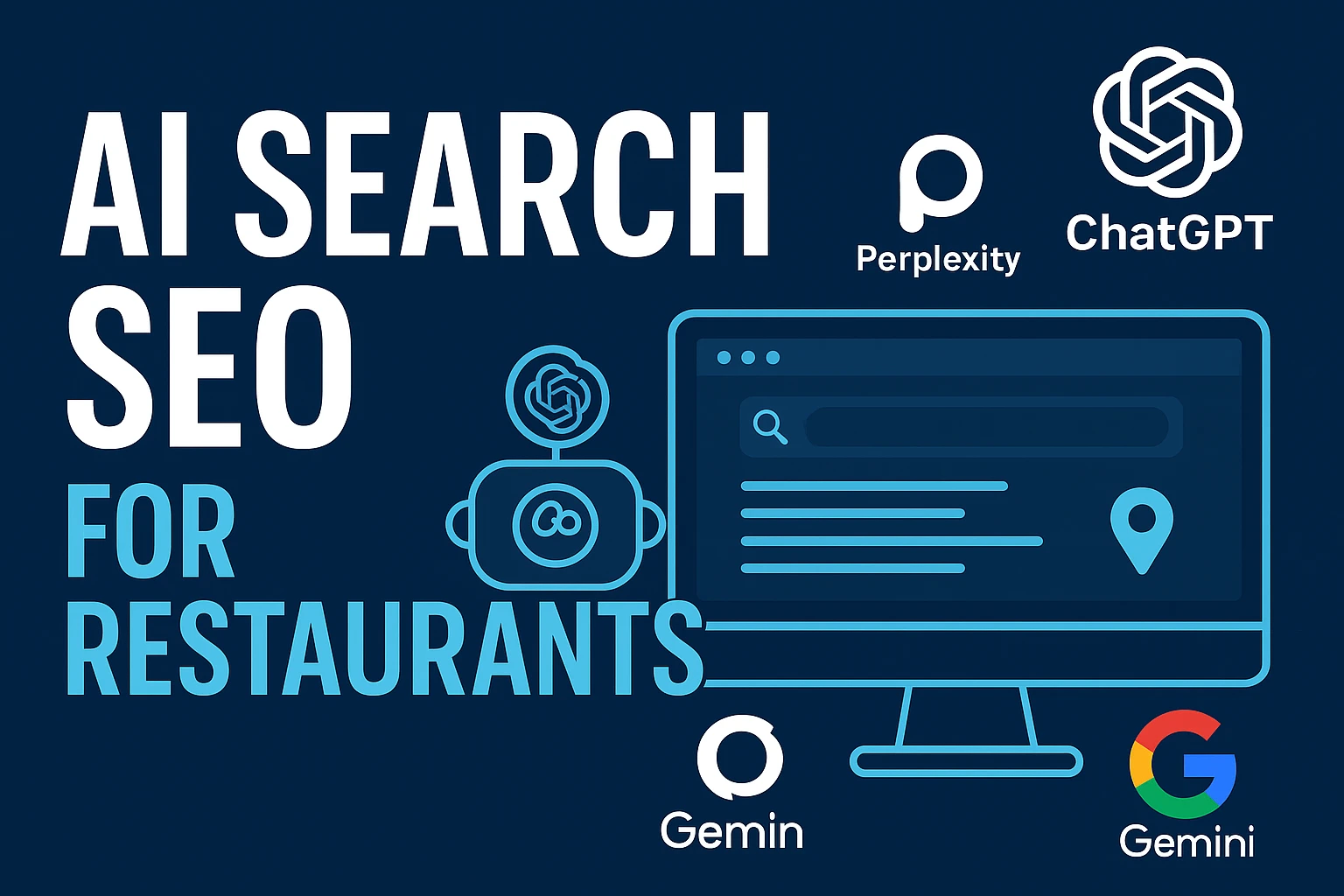
Answer engines like ChatGPT, Gemini, and Perplexity don’t return a page of links — they synthesize one answer. A restaurant is either in that answer, or it doesn’t exist to that customer. The stakes are already visible in the data: recent industry research found that 83% of restaurant locations never appear in AI-generated recommendations at all, even though most of them rank just fine on regular Google — and AI-driven referrals already convert at roughly twice the rate of traditional search traffic. Winning this era means understanding customer intent well enough to be the answer, not just a keyword match.
Search intent vs. keyword research: what’s actually different
SEO has always recognized that not all searches mean the same thing — the field calls this search intent, typically grouped into a few core types: informational (research before deciding), navigational (looking for a specific, known place), commercial (comparing options), and transactional (ready to book or order). Restaurant search adds two more that matter enormously in practice: local/proximity intent (“open now near me”) and, increasingly, generative or conversational intent — the multi-part, occasion-based questions native to AI answer engines.
Keyword research treats all of these as a flat list of terms with a volume number attached. Search intent research treats them as fundamentally different customer needs that require different answers, in different formats, in different places.
That distinction is what we call customer intent research: identifying the underlying need, occasion, and decision criteria behind a search — not just the words used to express it — and building a restaurant’s content, structured data, and listings to directly answer that need across organic search, local search, and AI answer engines. Where keyword research asks “what are people typing,” customer intent research asks “what does this person actually need right now, and what would a good answer look like.”
Where real customer intent actually shows up
Search volume data only captures one slice of intent. The fuller picture lives in places most keyword tools never touch:
- Reviews — the actual language customers use to explain why they chose (or skipped) a restaurant
- Reservation, phone, and chat requests — unfiltered occasion and dietary asks, in customers’ own words
- On-site search and menu filter behavior — what visitors actually look for once they land on your site
- Google Business Profile queries and local pack data — proximity- and category-driven discovery
- AI answer engine prompts and citations — whether and how ChatGPT, Gemini, and Perplexity mention a restaurant today
- Competitor citation analysis — which intents nearby competitors already own in AI answers, and which are still open
Mining these sources builds something closer to an intent map than a keyword list: the specific questions, occasions, and comparisons actually driving traffic to a restaurant and its competitors — scored not just by demand, but by whether that demand is currently being answered anywhere at all.
What this means for restaurant SEO going forward
Keyword research isn’t obsolete — it’s still useful for understanding baseline demand and language. But treated as the whole strategy, it leaves the fastest-growing part of restaurant discovery uncovered. The restaurants that will own AI search over the next few years are the ones that stop asking “what keywords should we rank for” and start asking “what does our customer actually need, and are we the answer to that anywhere it’s being asked.”
That shift — from keyword research to customer intent research — is the one we think matters most in restaurant SEO right now.
Want to see where your restaurant’s intent coverage stands today — across Google, Maps, and AI answer engines?
Turn Restaurant Marketing Ideas
Into Predictable Growth
Successful restaurant brands don’t grow by stacking tactics.
They grow by running a connected growth system that turns visibility into orders – and first-time guests into repeat customers.
01
Diagnose visibility gaps
Identify where Google Maps, SEO, and AI search visibility are leaking demand today.
02
Fix conversion bottlenecks
Optimize website, menu, and direct ordering so web traffic actually turns into orders.
03
Scale repeat revenue
Use guest data (Email, SMS) to increase frequency, lifetime value, and predictable growth.
Built for serious operators – not one-off campaigns.
FAQs
What makes a good restaurant website?
A good restaurant website should be visually appealing, represent the restaurant’s brand effectively, and include functional features that enhance the customer experience, such as mobile responsiveness and easy navigation.
Is it a good idea to use cheap website builders for restaurants?
While cheap website builders may seem appealing, they often provide limited functionality and SEO capabilities. Investing in a custom-designed website that reflects the restaurant’s unique brand is recommended for better long-term results.
What is functional website design?
Functional website design encompasses all operational elements of a restaurant’s website, including mobile responsiveness, online ordering, reservations, email marketing, and SEO. It goes beyond aesthetics to ensure the website effectively serves its customers.
Is there a problem with third-party provided websites for my restaurant?
Third-party websites, often referred to as microsites, can fragment a restaurant’s online presence and lead to inconsistent information. It is advisable for restaurants to focus on maintaining their own website to manage their online identity effectively.
Why do I need a restaurant website when I have a Facebook page?
A restaurant website serves as the primary online presence that the business controls, unlike a Facebook page, which is subject to platform changes. Relying solely on social media can be risky if policies or algorithms change.
How to build a restaurant website?
Building a restaurant website on a WordPress platform with a theme optimized for restaurants is recommended. Avoid cheap website builders and aim for a design that accurately represents the brand while being fully functional to support business goals.


Leave a Reply