
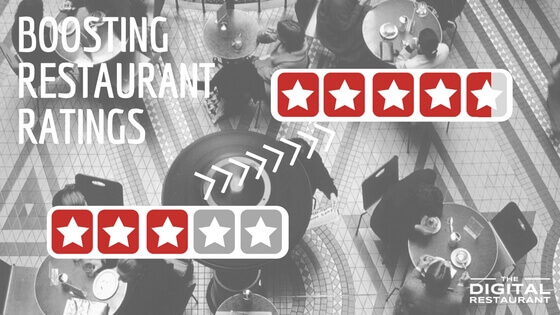
Why Moving from 3 to 4 Stars Changes Everything
If your restaurant is sitting at a 3.1–3.9 star rating, you are losing revenue every single day — even if your food is great.
Here’s why:
- Most customers filter out anything below 4 stars.
- Google’s local pack heavily favors businesses above the 4.0 threshold.
- AI search results increasingly summarize and prioritize higher-rated restaurants.
- Click-through rates increase dramatically once you cross the 4-star mark.
According to industry studies, businesses with ratings above 4.0 see significantly higher click-through rates in local search results.
Moving from 3.6 to 4.1 stars isn’t cosmetic. It changes visibility, customer perception, and conversion behavior.
The good news? You don’t need hundreds of reviews overnight. You need a structured reputation improvement strategy built around math, systems, and operational consistency.
In this guide, we’ll break down exactly how restaurants move from 3-star territory into 4+ authority — sustainably and legally.
The Rating Math: How Many 5-Star Reviews Do You Actually Need?
Improving your rating is not about luck. It’s math.
Let’s break it down.
Imagine your restaurant has:
- 120 reviews
- An average rating of 3.2
That equals a total rating score of: 120 × 3.2 = 384 total stars
Now let’s say you want to reach 4.0.
If you start getting only 5-star reviews going forward, here’s what happens:
To reach a 4.0 average, your total star count must increase enough to offset the lower ratings already baked into your average.
For example: If you add 80 new 5-star reviews:
Total reviews = 200
Total stars = 384 + (80 × 5) = 784
New average = 784 ÷ 200 = 3.92
Still not 4.0.
This is why most restaurants underestimate the effort required.
The takeaway:
- The lower your current rating, the more volume you need.
- You cannot “fix” a 3.2 rating with a handful of reviews.
- Reputation recovery requires consistent review velocity over time.
The good news? Once momentum builds, improvement accelerates.
The key is building a steady 5-star acquisition system — not chasing occasional wins.
Why You Can’t “Delete” Your Way to 4 Stars
One of the most common questions restaurant owners ask is:
“Can I remove negative reviews?”
In most cases, the answer is no.
Google and Yelp only remove reviews if they clearly violate platform policies (spam, hate speech, fake content, etc.). A legitimate bad experience — even if you disagree with it — usually stays.
Trying to aggressively flag or dispute reviews rarely improves your rating long term. In some cases, it can even trigger additional scrutiny.
More importantly:
Removing one or two negative reviews does almost nothing to move a 3.3 rating to 4.0.
Reputation improvement is not about deletion.
It’s about dilution.
The restaurants that successfully move from 3 stars to 4+ stars focus on:
- Increasing positive review volume
- Improving operational consistency
- Responding professionally to criticism
- Building a structured review acquisition process
If you’re dealing with specific platform issues, you can review the removal guidelines for each platform — but long-term rating growth comes from system-building, not takedowns.
If you’re exploring takedown options, understand the realities around removing negative Yelp reviews before relying on disputes as a strategy.
Stop the Rating Bleed: Identify and Fix the Real Triggers
Before you focus on getting more 5-star reviews, you must stop the 1–2 star reviews from continuing.
If low ratings are still happening, adding more volume becomes much harder.
Start by analyzing your last 20–30 negative reviews. Look for patterns.
Common operational triggers include:
- Slow service during peak hours
- Order accuracy issues (missing items, wrong items)
- Cold or inconsistent food quality
- Staff tone or attitude
- Cleanliness complaints
- Long wait times without communication
Most negative reviews are not about one catastrophic event. They’re about repeated friction points. Fixing even one recurring issue can dramatically reduce future low-star reviews.
For example: If multiple reviews mention slow service on weekends, your real problem may be staffing ratios — not customer perception.
If reviews mention cold food, your issue may be kitchen timing or pickup delays — not food quality.
The goal is operational alignment before reputation acceleration.
When negative feedback slows down, your 5-star acquisition efforts begin compounding much faster.
Platform Strategy: Where Your Rating Matters Most
Not all review platforms carry equal weight.
If your goal is to improve visibility and revenue, prioritize strategically.
1. Google Reviews (Highest Impact)
Google reviews directly influence:
- Local pack rankings
- Click-through rate from search
- Google Maps visibility
- AI-generated search summaries
For most restaurants, Google is the primary reputation battleground.
If your Google rating is below 4.0, improving it should be your top priority.
2. Yelp (Category Authority + Discovery)
Yelp still influences:
- Category searches
- High-intent diners
- Certain metro markets
However, Yelp has less direct impact on Google ranking compared to Google reviews themselves.
Focus on consistent responses and steady review volume — not aggressive dispute tactics.
3. Facebook & Other Platforms
Facebook reviews and other niche platforms carry less SEO weight but still influence perception.
They matter for brand consistency — especially if customers check multiple platforms before deciding.
Even with a 4-star rating, poor restaurant website optimization can reduce conversion.
The Strategic Takeaway
If resources are limited:
- Improve Google rating first
- Maintain consistency on Yelp
- Monitor and respond on secondary platforms
Reputation strategy should follow impact — not emotion.
Consistent business information across directories strengthens trust signals alongside your reviews. Here’s how local citations for restaurants support that visibility.
How Ratings Influence AI Search Results (2026 Reality)
Search is no longer just a list of blue links.
AI-powered search results increasingly summarize restaurants using:
- Review sentiment
- Average rating
- Common phrases in customer feedback
- Review frequency and recency
When someone searches:
“Best Italian restaurant near me”
“Family-friendly pizza place”
“Top-rated brunch spot”
AI systems analyze review language and star ratings to determine which restaurants appear in summaries.
That means:
- Consistent 5-star language matters.
- Recency matters.
- Sentiment patterns matter.
- Volume velocity matters.
If your restaurant is stuck at 3.4 stars with sporadic reviews, you are less likely to appear in AI-generated recommendations — even if your SEO is strong.
Reputation is no longer just social proof.
It is a search signal.
Restaurants that combine:
- Local SEO
- Structured data
- Consistent review growth
- Operational improvements
Gain a compounded visibility advantage.
Strong ratings amplify the impact of your restaurant SEO services by improving click-through rates and local pack performance.
Strong ratings also improve performance when running Google Ads for restaurants, since higher trust increases click-through rates.
Improving your rating should be part of a broader visibility strategy that includes technical optimization and structured data. If you haven’t addressed those fundamentals, review this restaurant SEO checklist.
Build a Consistent Review Acquisition System
The restaurants that move from 3 stars to 4+ stars do not rely on random customer goodwill.
They build a system.
A simple, consistent review acquisition process can include:
1. Post-Visit SMS or Email Follow-Up
Send a short, polite message within 24 hours of the visit:
“Thanks for dining with us! If you enjoyed your experience, we’d appreciate a quick review.”
Timing matters. The closer to the visit, the higher the response rate.
Follow-up emails remain one of the most effective ways to generate positive feedback. These restaurant email marketing strategies can help automate that process.
2. Tabletop QR Prompts
Discreet QR codes on receipts or table tents can encourage feedback while the experience is still fresh.
Avoid aggressive signage. Subtle works better.
3. Staff Scripts
Train staff to say something natural at checkout:
“If everything was great today, we’d love your feedback on Google.”
This alone can significantly increase positive review velocity.
4. Fix Issues Before They Become Reviews
Encourage in-person complaints.
If a guest is unhappy, empower staff to resolve the issue immediately.
A solved problem rarely becomes a 1-star review.
5. Monitor & Respond Consistently
Responding to reviews:
- Shows professionalism
- Signals activity to platforms
- Influences future reviewers
Consistency builds credibility.
The System Mindset
You don’t need a viral surge of 5-star reviews.
You need steady, predictable review growth every month.
When review velocity becomes consistent, your rating gradually climbs — and your visibility compounds.
FAQs
How long does it take to move from 3 to 4 stars?
It depends on your current review volume and how many new 5-star reviews you generate monthly. For most restaurants, consistent improvement takes several months of steady review velocity. Sudden jumps are rare — sustained momentum is more realistic.
Can I remove bad Google reviews?
Google only removes reviews that clearly violate its policies (spam, hate speech, fake content, etc.). Legitimate negative feedback usually remains. Long-term rating improvement comes from increasing positive review volume — not deleting reviews.
How many 5-star reviews do I need to improve my rating?
There is no fixed number. The lower your current rating and the higher your existing review count, the more 5-star reviews you’ll need. Rating improvement follows mathematical averages — not guesswork.
Does Yelp impact Google rankings?
Yelp reviews do not directly affect Google’s ranking algorithm the same way Google reviews do. However, Yelp still influences customer perception and local discovery in many markets.
What rating should restaurants aim for?
While anything above 4.0 improves visibility, restaurants that consistently maintain 4.3–4.6 stars tend to see stronger click-through rates and customer trust.
Turning Reputation Into a Growth Advantage
Improving your restaurant’s rating from 3 to 4 stars is not a cosmetic upgrade — it’s a visibility strategy.
Higher ratings influence:
- Local search rankings
- AI-powered search summaries
- Click-through rates
- Customer trust
- Revenue per guest
Reputation improvement works best when it’s integrated into a broader restaurant growth marketing strategy that aligns visibility, conversion, and retention.
Restaurants that treat reputation as a measurable growth lever — not just damage control — consistently outperform competitors in crowded markets.
If you’re serious about improving visibility, increasing rating velocity, and building long-term search authority, the next step isn’t chasing individual reviews.
It’s building the right system behind them.
If you’re unsure whether reputation, SEO, or conversion gaps are holding you back, a restaurant digital marketing audit can identify where improvement will have the biggest impact.
Improving your star rating is only one component of a larger restaurant reputation management strategy. Sustainable growth requires structured review acquisition, operational alignment, and ongoing visibility optimization working together as a system.
Turn Restaurant Marketing Ideas
Into Predictable Growth
Successful restaurant brands don’t grow by stacking tactics.
They grow by running a connected growth system that turns visibility into orders – and first-time guests into repeat customers.
01
Diagnose visibility gaps
Identify where Google Maps, SEO, and AI search visibility are leaking demand today.
02
Fix conversion bottlenecks
Optimize website, menu, and direct ordering so web traffic actually turns into orders.
03
Scale repeat revenue
Use guest data (Email, SMS) to increase frequency, lifetime value, and predictable growth.
Built for serious operators – not one-off campaigns.
Leave a Reply